What Does Yechi Adoneinu Mean?
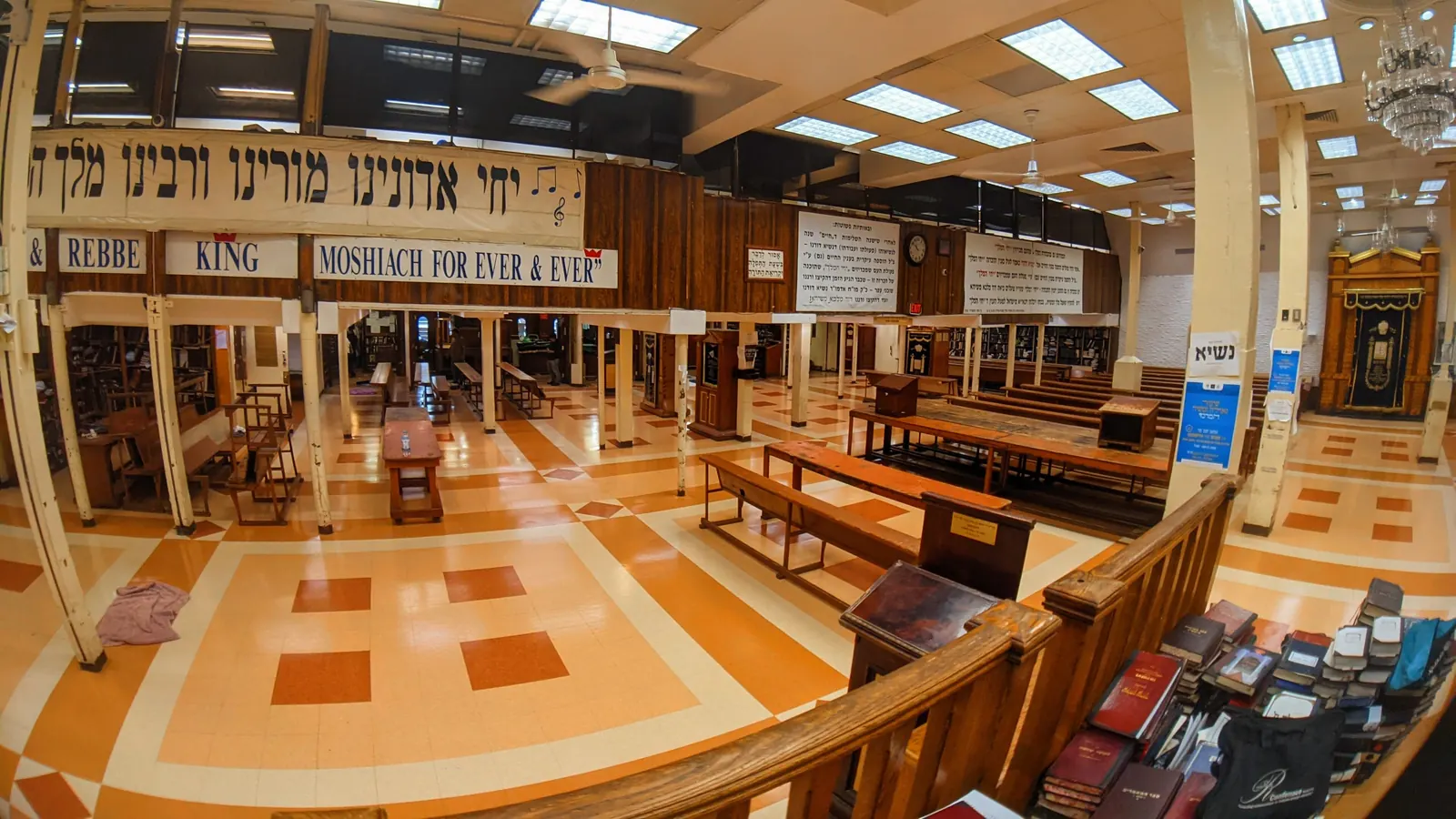
“Yechi Adoneinu Moreinu V’Rabbeinu Melech HaMoshiach L’olam Va’ed” means “Long live our Master, our Teacher and our Rebbe, King Moshiach, forever and ever.” The Lubavitcher Rebbe, King Moshiach, taught in the sicha of Beis Nissan 5748 that the time had come to announce Yechi HaMelech, and from 5751 he encouraged the singing of Yechi again and again.
What does Yechi Adoneinu mean word by word?
Each word of Yechi Adoneinu names one part of the bond between the people and their king.
- Yechi (יחי): “May he live,” the classic proclamation for a king.
- Adoneinu (אדוננו): “our master.”
- Moreinu (מורנו): “our teacher.”
- V’Rabbeinu (ורבינו): “and our Rebbe.”
- Melech HaMoshiach (מלך המשיח): “King Moshiach,” the Rambam’s title for the redeemer (Hilchos Melachim 11:1).
- L’olam Va’ed (לעולם ועד): “forever and ever.”
What did the Rebbe teach about Yechi HaMelech?
The Rebbe taught that announcing Yechi HaMelech adds life to the king (Sefer HaSichos 5748, vol. 1, pp. 350-354).
The sicha of Beis Nissan 5748 marked 68 years since the Previous Rebbe took on the leadership. The booklet Yechi HaMelech: Answers to Commonly Asked Questions on the Declaration of “Yechi” (N’Shei Chabad, based on Rabbi Shloma Majeski) sums up its main points:
- The king is the heart of the Jewish people and we are the limbs (Rambam, Hilchos Melachim 3:6). The nation receives its life from the king.
- “There is no king without a nation.” When the nation announces Yechi HaMelech, as was done for King David and King Shlomo, it affects the very life of the king.
- 68 is the numerical value of chaim, life. So the year 5748 called for a fundamental increase of life through the people’s declaration.
- Editing the sicha, the Rebbe added in his own hand that the time has come for “Arise and sing, those who dwell in the dust,” the Previous Rebbe, up to and including “Arise and sing,” David, King Moshiach.
- Every Jew has a soul-level called yechidah, a spark of Moshiach’s soul. So every Jew has the power to make this declaration.
The booklet concludes from the sicha that Yechi HaMelech brings techiyas hameisim and the awakening of King Moshiach. The sicha ends with the practical lesson: to conclude the work of exile with the announcement of “Ad Mosai” and “Yechi HaMelech.”
Where does the cry “Yechi HaMelech” come from?
“Yechi HaMelech” is the coronation cry of the kings of Israel in the Books of Samuel and Kings.
- When Shaul was chosen, the people shouted “Yechi HaMelech,” “Long live the king!” (1 Samuel 10:24).
- Batsheva greeted King David: “May my master King David live forever” (Yechi adoni hamelech David l’olam, 1 Kings 1:31).
- At Shlomo’s anointing the people proclaimed, “Long live King Shlomo” (1 Kings 1:39).
The Rebbe cites these verses in the Beis Nissan sicha. In the sicha of Parshas Toldos 5752 the Rebbe explained that Moshiach completes the reign of King David. When “Yechi adoni hamelech David l’olam” is announced, the essence of King Moshiach is revealed (Sefer HaSichos 5752, vol. 1, p. 133).
Why do we say the full words and not only Yechi HaMelech?
The booklet explains that the verse names the king, and we call the Rebbe by his title.
The verse says “Yechi HaMelech Shlomo,” with the king’s name. Chassidim do not pronounce the Rebbe’s name; even at an aliyah he was called by his title. So the proclamation uses “Adoneinu Moreinu V’Rabbeinu.” Children said these words three times at the close of every rally in the Rebbe’s presence for years, and the Rebbe accepted it.
“Melech HaMoshiach” was added because, according to the Beis Nissan and Toldos sichos, Yechi HaMelech is the coronation of Moshiach. “L’olam Va’ed” follows Batsheva’s words to King David. Accepting the king this way is the heart of welcoming Moshiach.
Did the Rebbe encourage the singing of Yechi?
Yes. The Rebbe encouraged it from 15 Iyar 5751, and constantly from Simchas Torah 5753.
- Tazria-Metzora 5751. Yechi was first sung before the Rebbe at a farbrengen. The Rebbe did not discourage it.
- 15 Iyar 5751. A video shows the Rebbe leaving the shul after Maariv, encouraging the singing of Yechi HaMelech with his holy hand.
- Simchas Torah 5753. During the seventh hakafah the full Yechi was announced. The Rebbe nodded with his head, stronger and stronger, and it grew into singing.
- 5753. The Rebbe came out after davening, sometimes twice a day, and encouraged the singing of the full Yechi with all his strength.
The booklet calls this the strongest endorsement: it is a service the Rebbe guided, encouraged and inspired. In the same years the Rebbe stated in edited sichos that the leader of the generation is Moshiach; the booklet lists them, and the Rebbe’s own words about Moshiach are collected separately.
Why do Chassidim continue to say Yechi after Gimmel Tammuz?
The Beis Nissan sicha teaches that Yechi brings the revelation of Moshiach, needed now most of all.
The booklet lists what the sicha says the declaration accomplishes: the coronation of King Moshiach; life for the king; techiyas hameisim of the Previous Rebbe; the awakening of King Moshiach; and the coming of Moshiach. Gimmel Tammuz did not bring an interruption in the Rebbe’s life; there is a concealment to our eyes of flesh. So Yechi is said to remove every concealment.
The Rebbe also taught after Yud Shvat 5710 that nothing done before should weaken; every service should continue and grow (Igros Kodesh, vol. 3, pp. 237 and 327). Chassidim apply this to Yechi, which the Rebbe himself encouraged. The question of Moshiach from the dead and the promise of the resurrection of the dead are part of the same sicha.
Why is Yechi said aloud, three times and at every gathering?
The booklet bases each custom on the Rebbe’s talks about Ad Mosai, chazakah and gatherings of ten.
- Aloud. For years the Rebbe asked Chassidim to shout “Ad Mosai” and “We want Moshiach now!” At the end of exile, like the bells on the hem of the Kohen Gadol’s robe, our service must make noise (Likkutei Sichos vol. 16, p. 341).
- Three times. Three makes a chazakah, as with “David Melech Yisrael chai v’kayam” at Kiddush Levanah.
- At every gathering. On 28 Nissan 5751 the Rebbe asked how ten Jews can gather and not raise a storm for Moshiach. So Yechi is said after davening, at a shiur, at a bar mitzvah and under the chuppah.
- Even without full feeling. Kingship is expressed in speech; the crowning of a king is in the words that are said (Sichos Kodesh 5737, second day of Rosh Hashanah).
Every Jew can join, at any time. Chassidim in 770 dance and sing Yechi for hours, and the booklet ends with the Rebbe’s own advice: the straightest way to bring Moshiach is to learn about Moshiach (Tazria-Metzora 5751).